
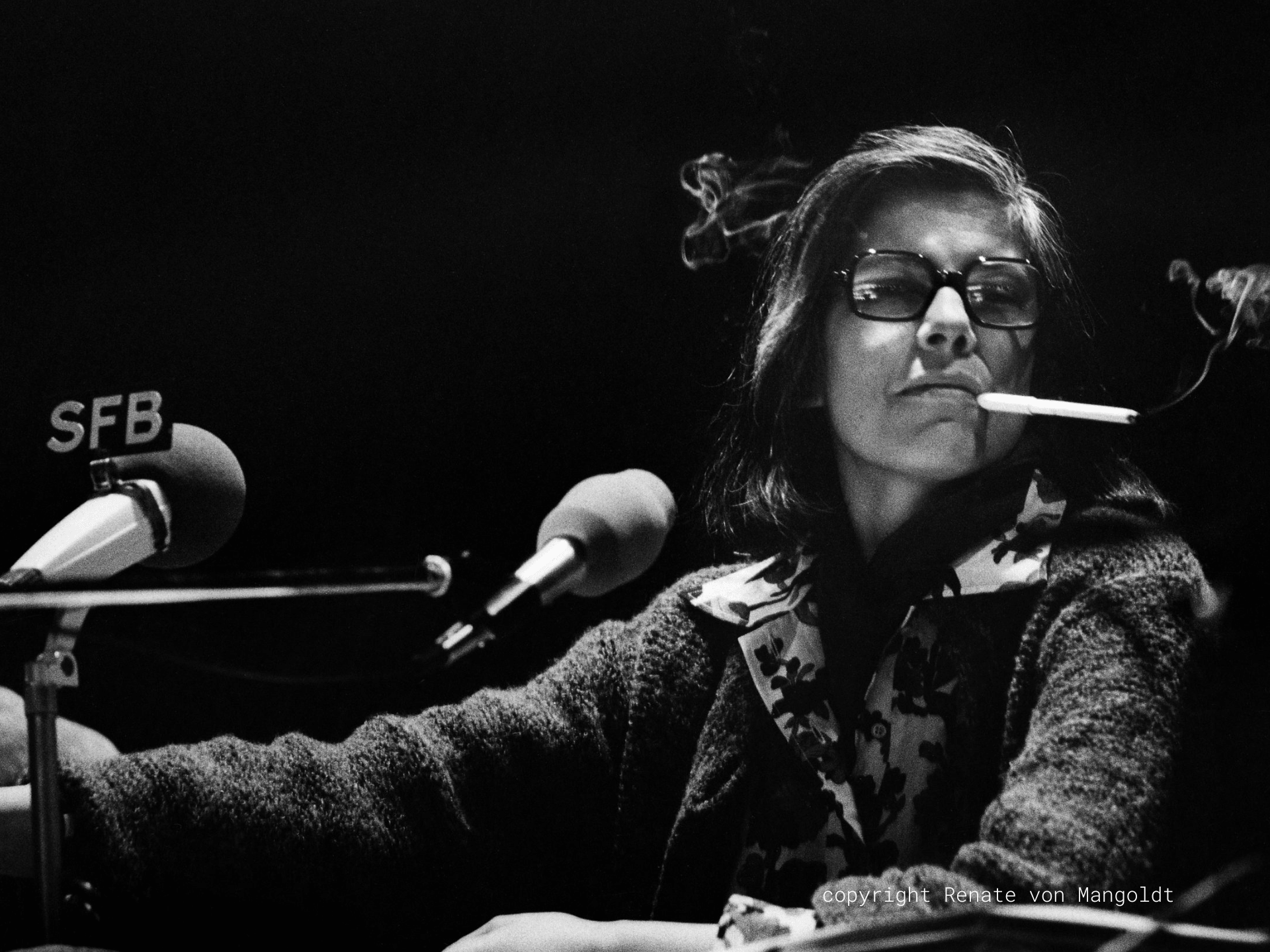
Notes on Camp is the essay that made Susan Sontag famous and that queer culture has been arguing with ever since. Rachel Pafe hosts a close reading that moves through the fifty-eight notes and asks what camp holds today: as sensibility, as strategy, as inheritance and as unfinished business.
What the essay does
Notes on Camp was published in Partisan Review in 1964. It listed camp as a sensibility, not a movement: love of the artificial, of exaggeration, of failed seriousness. Sontag opened camp to a wide readership and drew critique from queer writers who felt she had extracted a gay code without naming it. That tension is still productive.
How the session works
Seminar format. Small group, facilitated in English. Prior reading is welcome but not required. Bring the text or read on site.
Practical info
Free registration through the Schwules Museum. Standard venue rules apply. Part of the accompanying programme for the exhibition Susan Sontag: Seeing and Being Seen at the Schwules Museum.
Before you mark your calendar: always double-check dates, location, and ticket info directly with the organizers.
Even the best promises come with fine print.