
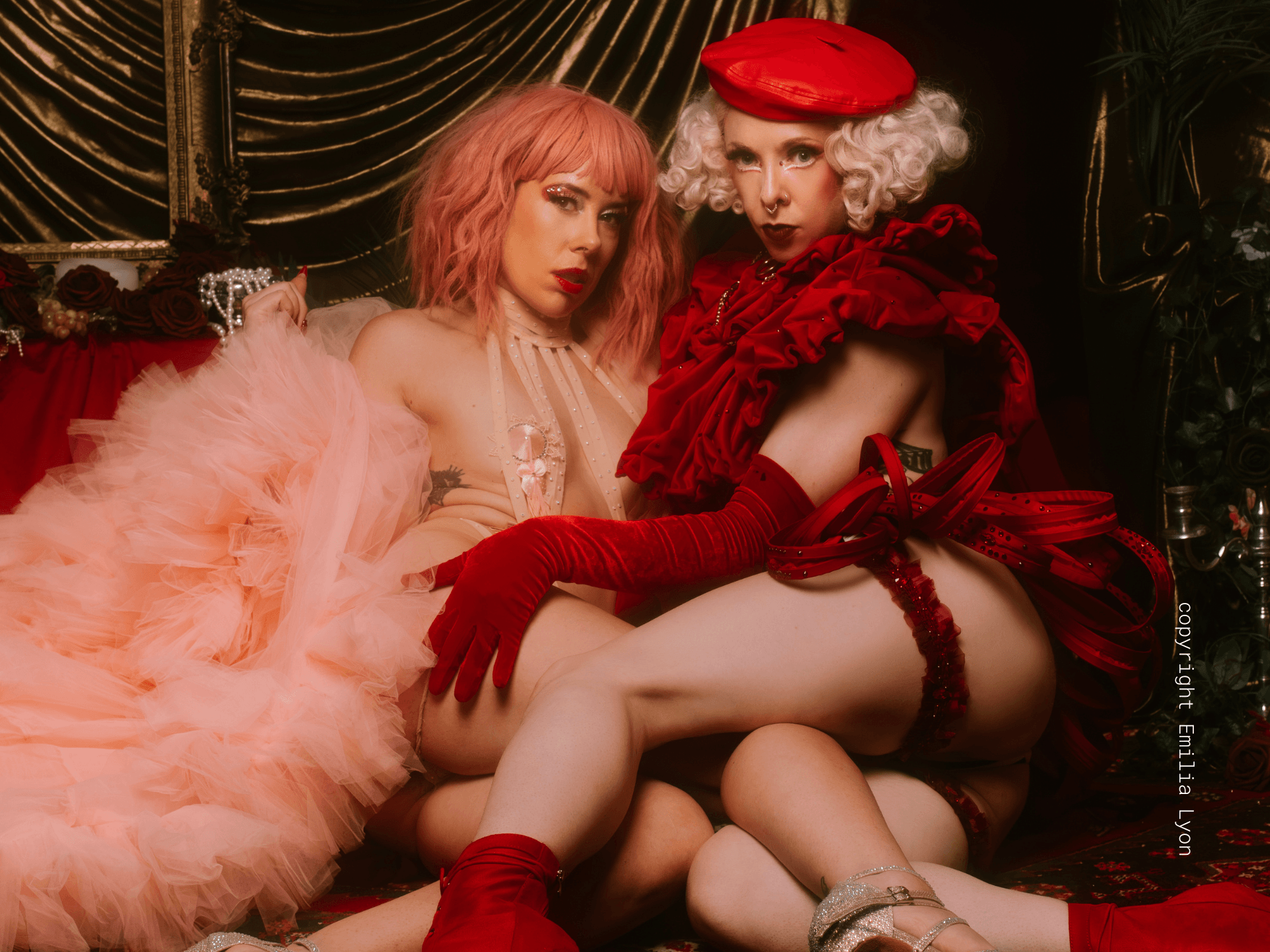
From Weimar-era cabaret to contemporary queer performance, Fifi Fantôme and Dunja von K are creating a world where bodies, identities and social expectations can be challenged. Ahead of their new production, Maison Clit, we spoke about the politics of performance, the freedom of the stage and why Berlin still matters.
The Velvet Creepers describe their work as “Weimar Cabaret on acid.” It is a fitting introduction to a collective that brings together circus, burlesque, contemporary performance art, dark humour and queer culture.
Founded in Berlin in 2018, The Velvet Creepers are made up of Fifi Fantôme and Dunja von K and bring together a number of performers and artists. They have developed their own theatrical language. Their shows are strange, playful, provocative and often political. A performance might move from spectacular physical artistry to absurd comedy, from sensuality to a critique of the expectations society places on bodies and gender.
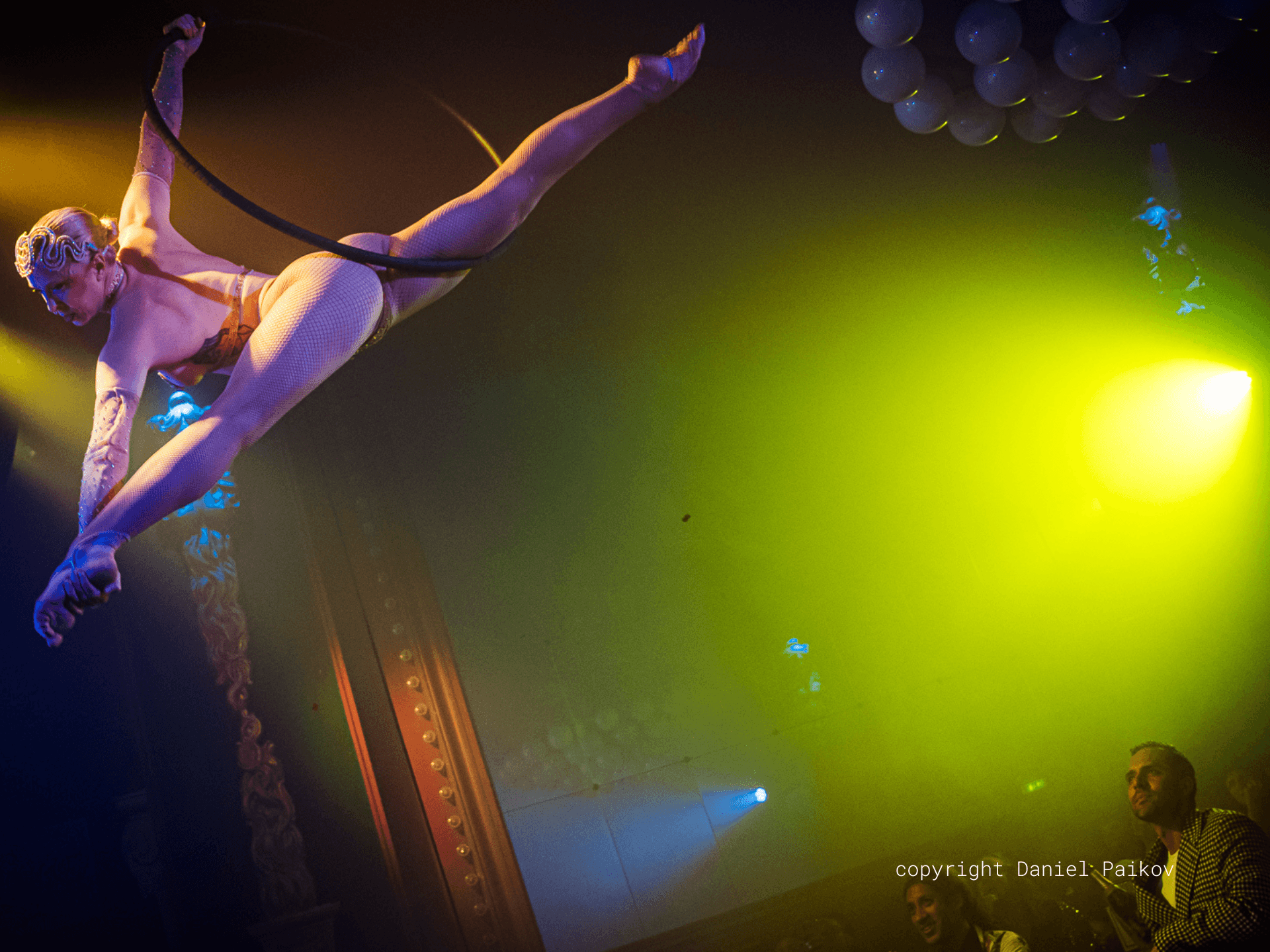
But what interests them most is what happens when these elements come together in front of an audience. Can a theatrical experience make people question assumptions they have carried for years? Can a cabaret become a space where people feel free to imagine a different way of living?
We spoke with Fifi and Dunja about the ideas behind their work, the political history of cabaret, their audiences and their upcoming production, Maison Clit.
Creating a Queer Utopia
BKC: For someone who has never experienced one of your shows, who are The Velvet Creepers?
Fifi Fantôme: The Velvet Creepers are a queer cabaret and circus. We mix underground performance culture, cabaret, burlesque and performance art. I think we bring people into a show and a world that goes against what society expects.
It's about escaping into a queer utopia, seeing how the world could be shaped and how we could live together. Our shows are political, funny and strange. We love the abnormal, the intense, the silly and the absurd.
Dunja von K: When we started in 2018, Berlin already had this very special underground cabaret culture. There was classical burlesque and there were underground performances, but we wanted to bring in something darker and creepier. That's where the name comes from.
We also wanted to make it more appealing to the wider queer community. We wanted to create more than a show: a community, almost a party, somewhere people could feel at home.
What makes your approach different from traditional cabaret or burlesque?
Fifi: We draw from many different worlds. Dark cabaret existed long before us, of course, but we combine these influences in our own way.
Dunja: We bring together neo-burlesque, circus, contemporary art, performance art and classical cabaret. That particular combination wasn't really present in Berlin when we started.
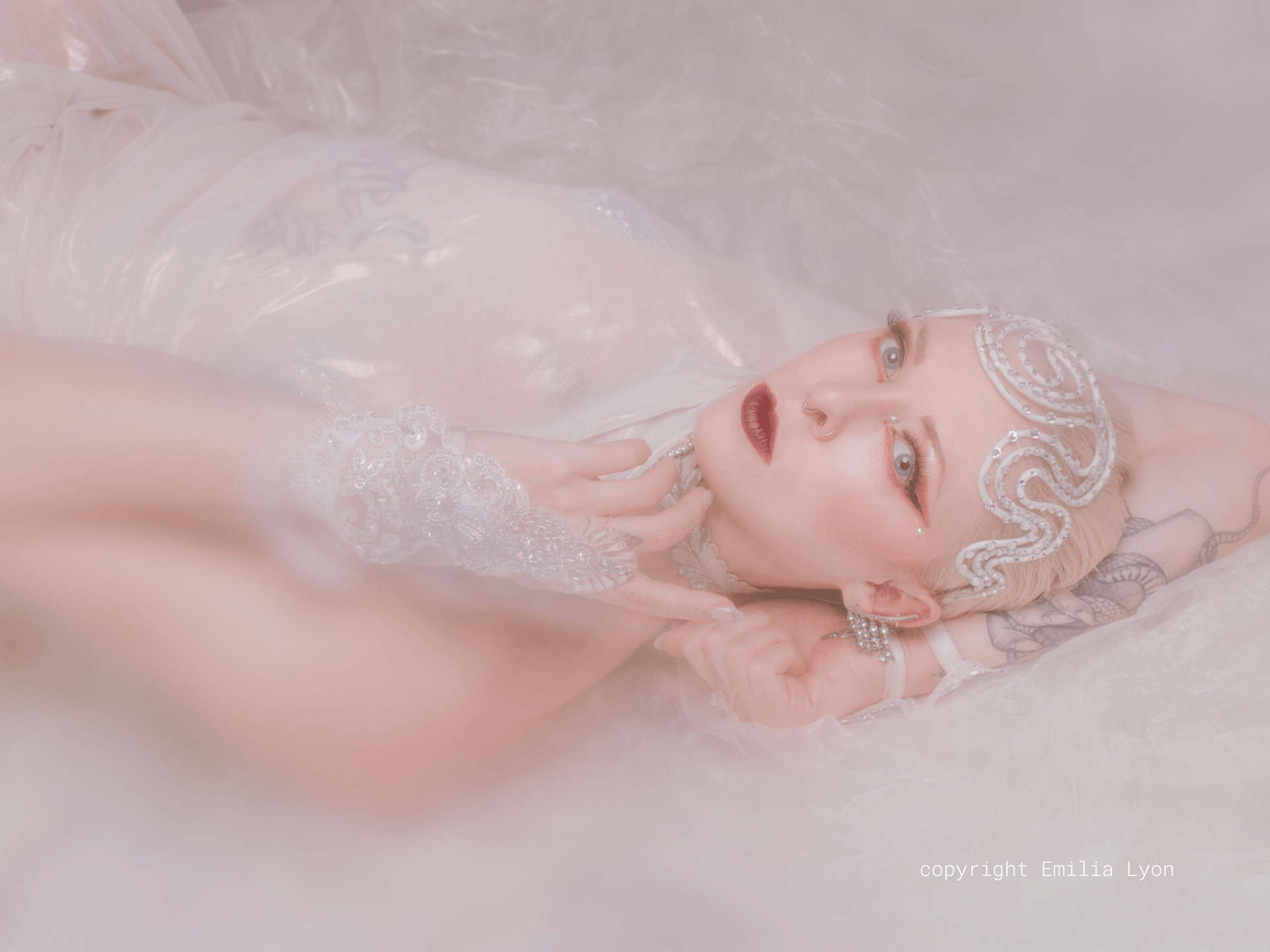
The Body Belongs to the Person Performing
Your performances often explore sexuality and the body. What does it mean to claim ownership of your body on stage?
Fifi: Seeing female and queer naked bodies on stage challenges what society tells women and queer people about their bodies, and about whether they have ownership over their own sexuality.
People have come up to me after performances and told me that seeing us made them feel more comfortable with their own bodies. They see someone on stage who is confident, who claims their sexuality and sensuality as their own, regardless of what society thinks.
For some people, that creates a sense of liberation. They realise that things they have been afraid of, or have been taught to repress, don't have to be shameful. They can have power and ownership over their own bodies.
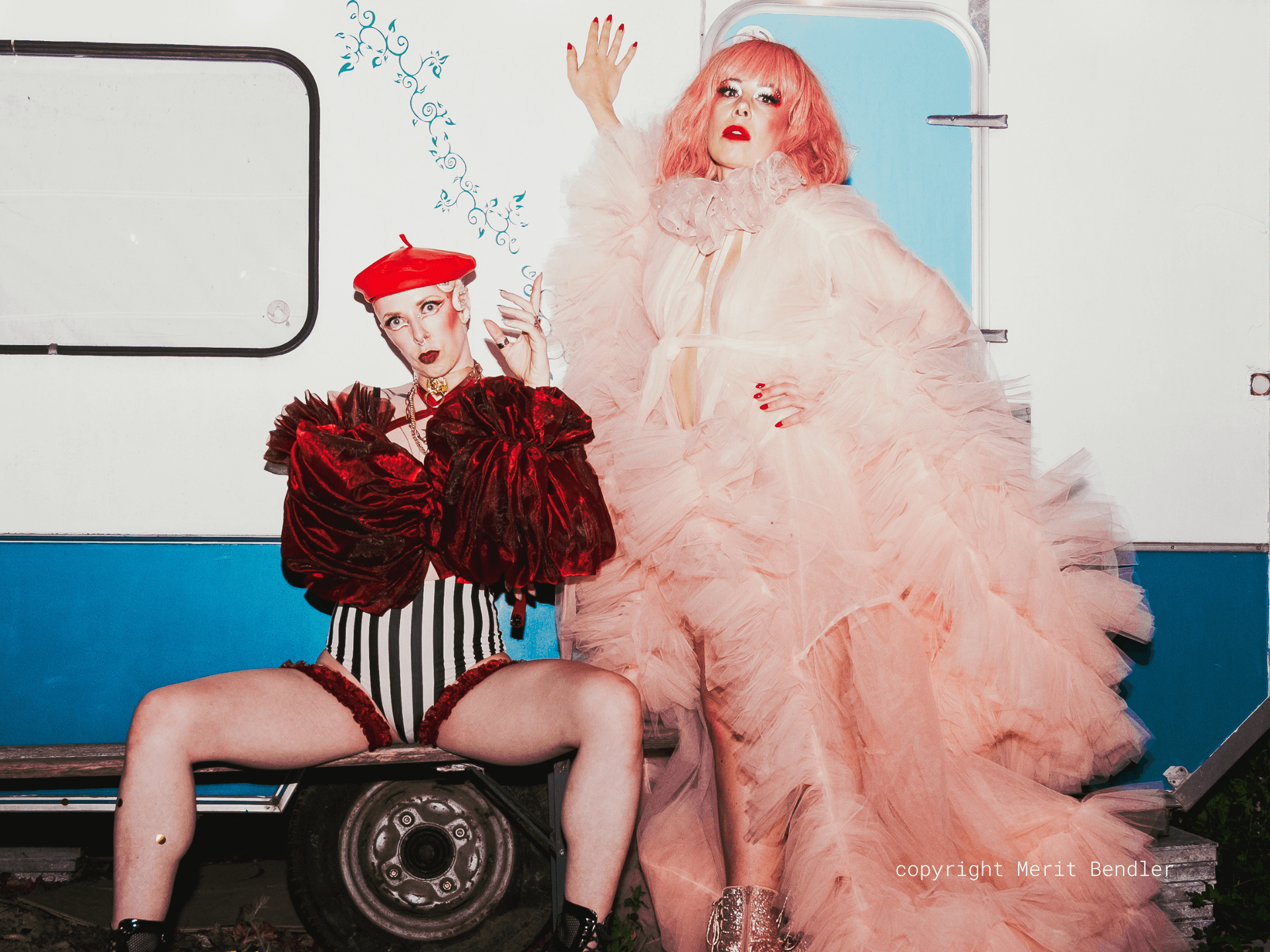
When you talk about sensuality on stage, what does that actually look like?
Dunja: You play with your movements, your costume, your eyes and the story you're telling. You flirt with the audience in different ways.
But not everything has to be sensual or sexy. I have acts where I'm completely naked on stage, and those moments aren't necessarily about being sexy or showing off my body. They're about vulnerability.
Women are objectified everywhere. You can be in a sauna, at a swimming pool or walking down the street in a winter coat. Your body is still interpreted through other people's expectations.
When I'm naked on stage, I'm reclaiming that body. I can be sexy and playful if I want to, but I can also be vulnerable. The audience doesn't get to decide what my nudity means.
Fifi: The female or queer body is constantly sexualised. Society puts women into categories like the virgin or the whore.
Being naked on stage can be a way of saying: I'm here, I'm choosing this, and this is my power.
There is liberation in showing people another possibility, a world where women and queer bodies aren't automatically sexualised in every situation.
Dunja: And there's an important boundary. Being naked on stage is not an invitation to touch us or to do whatever you want with someone else's body.
The audience is invited to watch and experience the performance. That's where the line is.
Queerness Has No Uniform
Queerness is central to your work. What does it mean to you personally?
Fifi: I think this is something society often doesn't understand. Queerness is embodied differently by different people.
I may present as female much of the time, but I'm gender-fluid. I use both she and they pronouns. Gender is a spectrum, and sexuality is a spectrum.
On our stage and in our community, we bring together people who embody queerness in different ways. It doesn't always look the way people expect it to look.
For me, it's about imagining another way of living and thinking about gender, sexuality and the world, beyond what society defines as normal.
Dunja: You don't have a stamp on your forehead saying you're queer. You don't have to have a particular haircut or look a certain way.
It's about embracing people as they are and being comfortable with all the different ways people experience gender and sexuality.
Why Cabaret Is Political
You describe your style as “Weimar Cabaret on acid.” What fascinates you about the Weimar era, particularly its combination of cultural freedom and political instability?
Fifi: I think fascism and the rise of cabaret often happen at the same time because, to me, cabaret is a fight against fascism.
Fascist ideology promotes the fantasy that everyone can conform to one ideal of what a human being should be. Cabaret brings people together through their differences.
We're all weird, imperfect, strange and queer. We come from different places and live different lives, but we can come together as a community and accept one another.
Cabaret performances allow people to see another way of living. They offer freedom, sexual liberation and community. That's why I see cabaret as a counterculture to fascism.
I think we're experiencing a similar tension in the 2020s. There is a rise in fascist politics, but there is also a growing interest in cabaret culture. I see these developments as opposing forces.
Dunja: Art has always been political. When fascism rises, people feel a stronger need to express themselves and resist through art.
What fascinates us about the Weimar era is that these worlds existed at the same time. There were strict social expectations, but also an underground culture of liberation and sexuality.
I see parallels today, including the renewed popularity of traditional gender roles and the idea that women should fit into a particular model of domestic life.
Through performance, we can show that there are other possibilities. People can live beyond those expectations.
Can a Performance Change Someone's Mind?
Have you noticed changes in how audiences respond to nudity, gender roles and provocation since you founded The Velvet Creepers in 2018?
Fifi: In Berlin, the core of our audience has remained fairly similar. Many people already agree with what we're doing, or they actively want to be challenged by ideas about gender roles, eroticism and nudity.
But when we perform outside Berlin, we sometimes encounter people who aren't expecting what they see. We've had people walk out of our shows because something was too much for them.
I also think there's beauty in that.
Performance creates a fantastical world. Someone with very heteronormative views might not listen to you if you sat down and tried to discuss gender or sexuality. But when they enter a performance, they experience those ideas in a completely different way.
Maybe they leave with just a slightly different perspective. For me, that's one of the beautiful things about what we do.
Dunja: We also see people who come to our shows for the first time and gradually become more open.
Sometimes they return to the next show dressed differently, expressing themselves more freely. They begin to feel that they belong to this community.
Not everyone living in Berlin grew up here. Some people come from small towns or places where they couldn't be themselves without being judged.
Then they experience a show and realise there's a world where they can be who they want to be.
We perform regularly in Leipzig, too. Some people have walked out because they were shocked, but we've also had young queer people return again and again, telling us how important these performances are to them.
Do you believe art can change society's ideas about what is acceptable?
Dunja: I think art has always changed people's lives, in all its forms.
People take different things from it. Some see queer performance and realise that they have possibilities they never imagined.
I've heard older people say that when they were young, they couldn't have been so open about their sexuality or the way they wanted to live.
Art can show people that they don't have to follow a prescribed path. You don't have to get married or have children. You can choose another life.
But art can also be interpreted negatively or used against people. It has always had the power to influence society in different directions.
Politics, Pleasure and a Giant Tampon
How do you balance political messages with entertainment?
Fifi: What we do is very political, and we put a lot of politics into our shows.
But there's a balance between critiquing the status quo and giving people an escape from everyday life.
Life is hard, and it's harder for some people than others. We want people to experience hedonism, community and a sense of freedom.
We don't want them to leave feeling weighed down by a show that's only political and heavy. We want to be thought-provoking, but we also want people to have a good time.
Humour is an important part of that. Burlesque has a history of social critique expressed through comedy. I find it fascinating to use humour to question society.
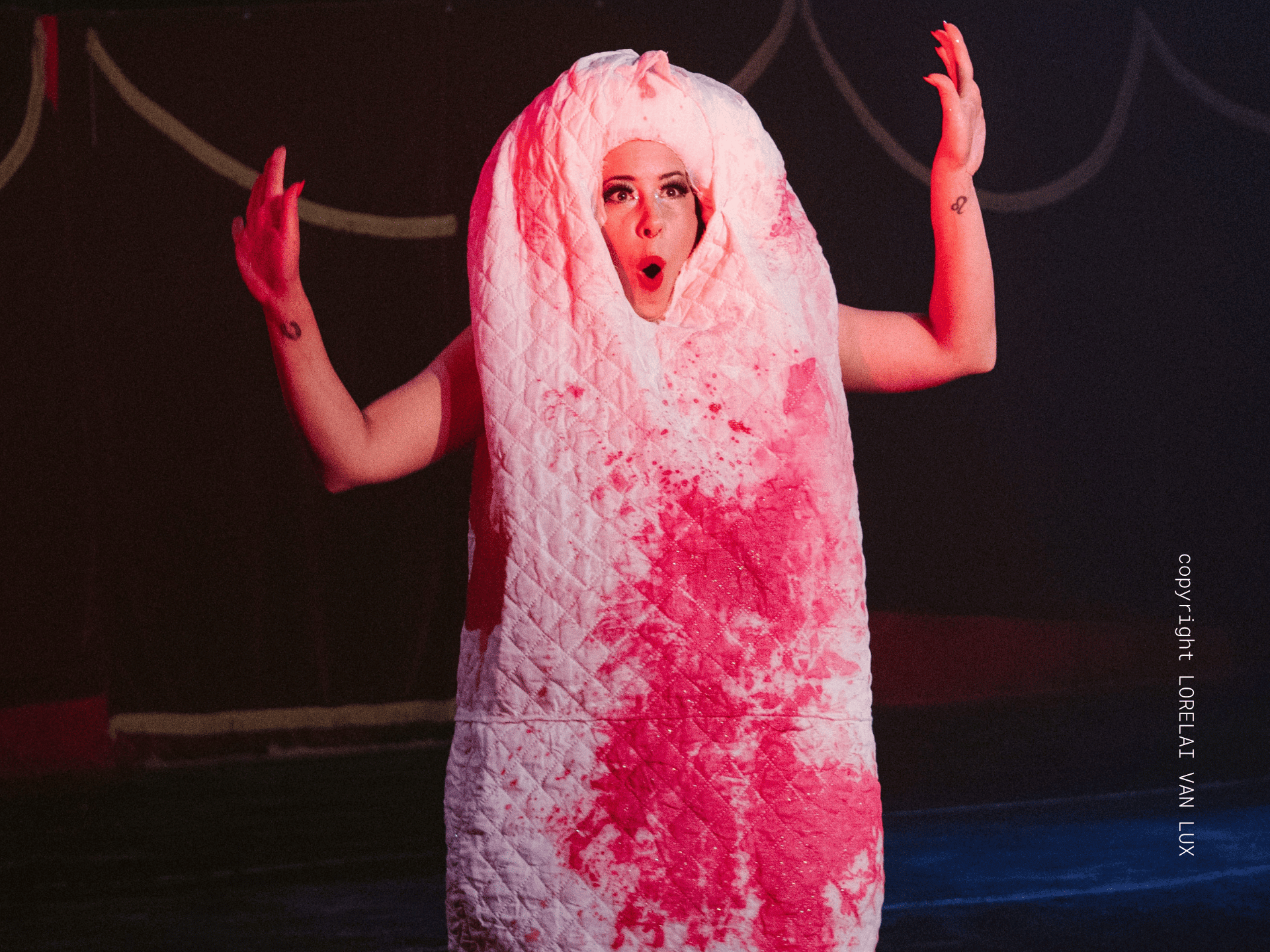
Dunja: I mean, I come on stage as a giant tampon and pour blood all over myself.
It's absurd, but it also opens up a conversation about menstruation and the shame surrounding it.
Berlin, Belonging and the Freedom to Be Different
Berlin has long attracted artists and performers looking for room to experiment. For The Velvet Creepers, the city's underground cabaret scene offered a starting point, but their ambitions went beyond developing a distinctive stage aesthetic.
They wanted to build a place where audiences could participate in a culture of openness, encounter unfamiliar ideas and feel part of a community.
That sense of belonging also shapes how they understand their audience. As Dunja describes, people who arrive in Berlin from less accepting environments may discover through performance that they can express parts of themselves they previously kept hidden.
The stage becomes a place where possibilities can be tested, and where the experience may continue after the curtain falls.
Maison Clit: A Feminist Battle Cry
Your new production is called Maison Clit. What can audiences expect?
Fifi: I think of it as a French boudoir feminist battle cry.
We're exploring the ideas society imposes on women and how we can reclaim our sexuality. It's about embodied experience, challenging gender roles and breaking down labels around sexuality.
And it's also about having a really good time.
Dunja: I think it's going to be very different from our previous shows. Every Velvet Creepers production has a new concept and a new idea, but I'm especially excited about this one.
We have Lolita Va Voom joining us as a guest artist, and Katie Craw coming from Paris to host. We're also bringing live piano music into the show.
What would you say to someone who has already seen several Velvet Creepers productions and wonders what will be different this time?
Fifi: We always work with different artists, and there's always something new happening.
Every show has a new theme and a different creative approach. There's always something new to explore.
A Different Way of Imagining Society
The Velvet Creepers' work raises a question that reaches far beyond the stage: Who gets to decide how a body should look, how a person should express gender, or which forms of sexuality deserve acceptance?
Fifi and Dunja approach these questions through the language of cabaret, combining humour, spectacle, vulnerability and provocation. Their performances invite audiences to experience a world in which difference is welcomed and people can explore identities beyond familiar social expectations.
For some, that world may be entertaining. For others, it may be uncomfortable. And for those who rarely see their experiences reflected in public culture, it can offer something more personal: recognition, confidence and a sense of belonging.
Maison Clit continues that exploration, bringing questions of sexuality, gender and bodily autonomy into a new theatrical setting.
Before you mark your calendar: always double-check dates, location, and ticket info directly with the organizers.
Even the best promises come with fine print.