
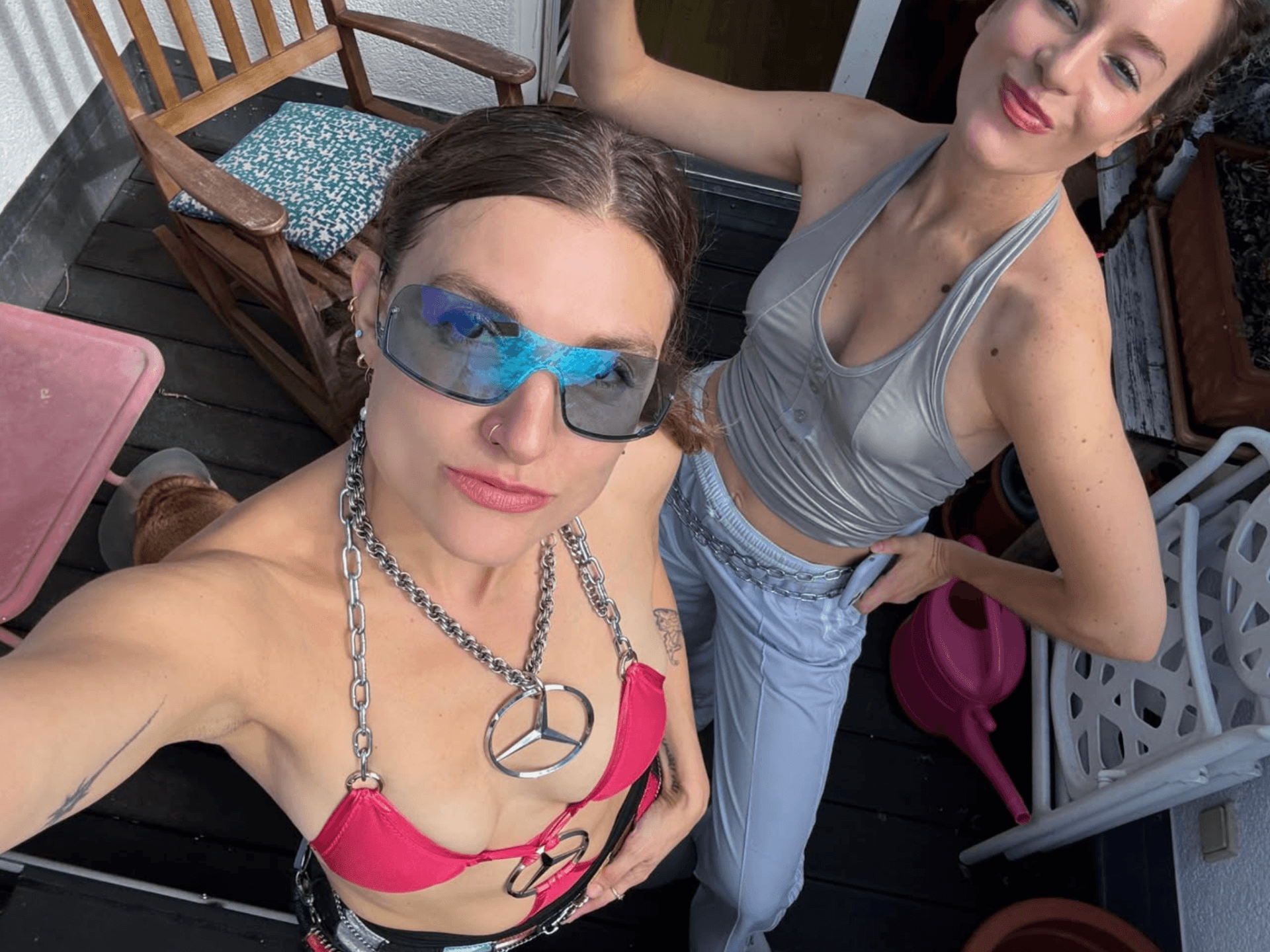
I asked designer Liesa Maria Lettau what to wear to a Berlin club. She told me I was asking the wrong question.
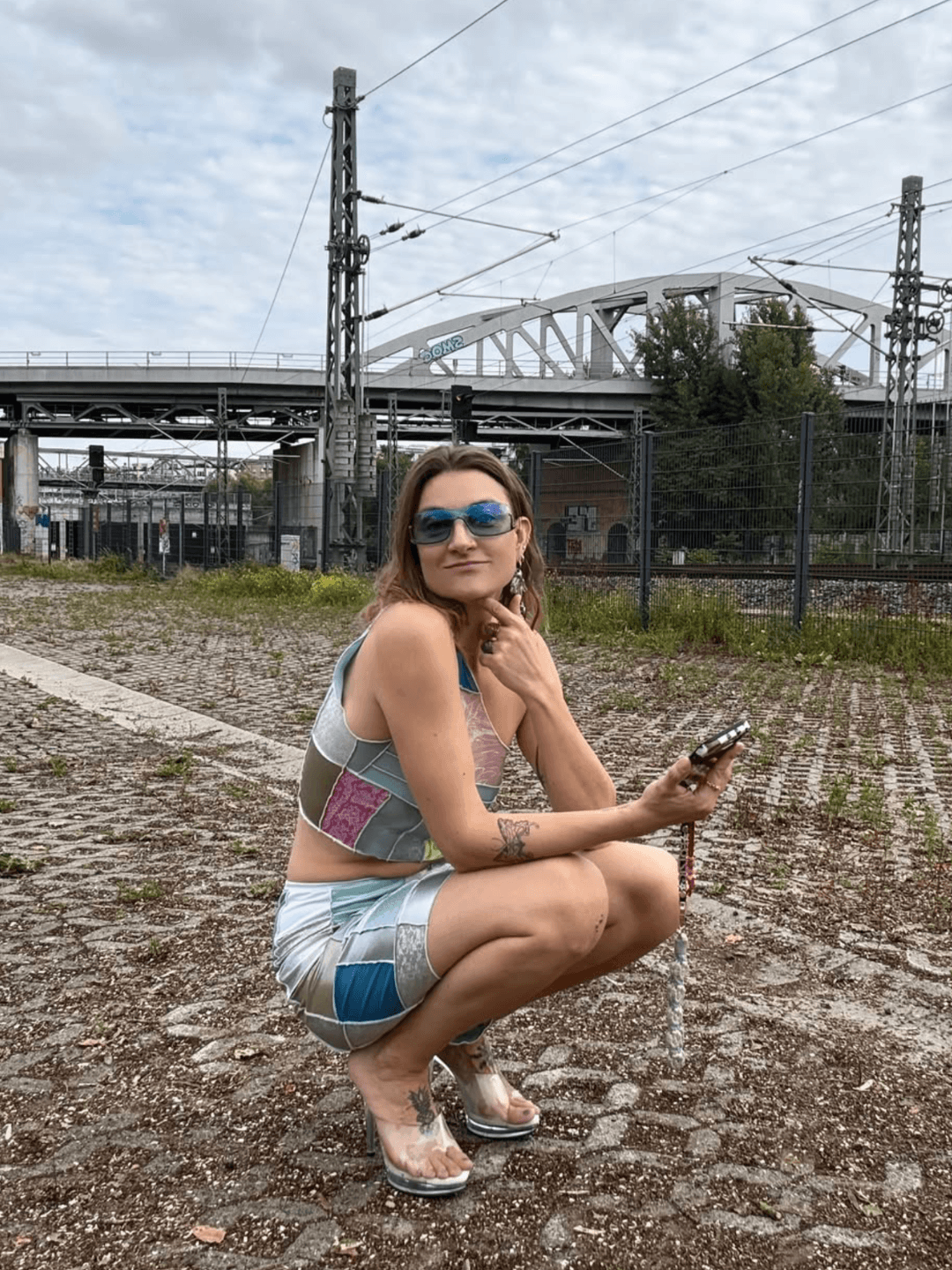
I wear Liesa’s clothes more often on a Tuesday afternoon than on a Saturday night. Fringes on my bike. Something tight and shimmering at the supermarket. People look. I smile back. Liesa does the same. When we compared notes, we both laughed: it works especially well on a bicycle.
At the Berlin Kink Calendar, one question reaches us more than any other. What do I wear to a club in Berlin? Tourists ask it. Newcomers ask it. People who have lived here for years still ask it before a new party. So I took the question to the woman who makes half of my wardrobe.
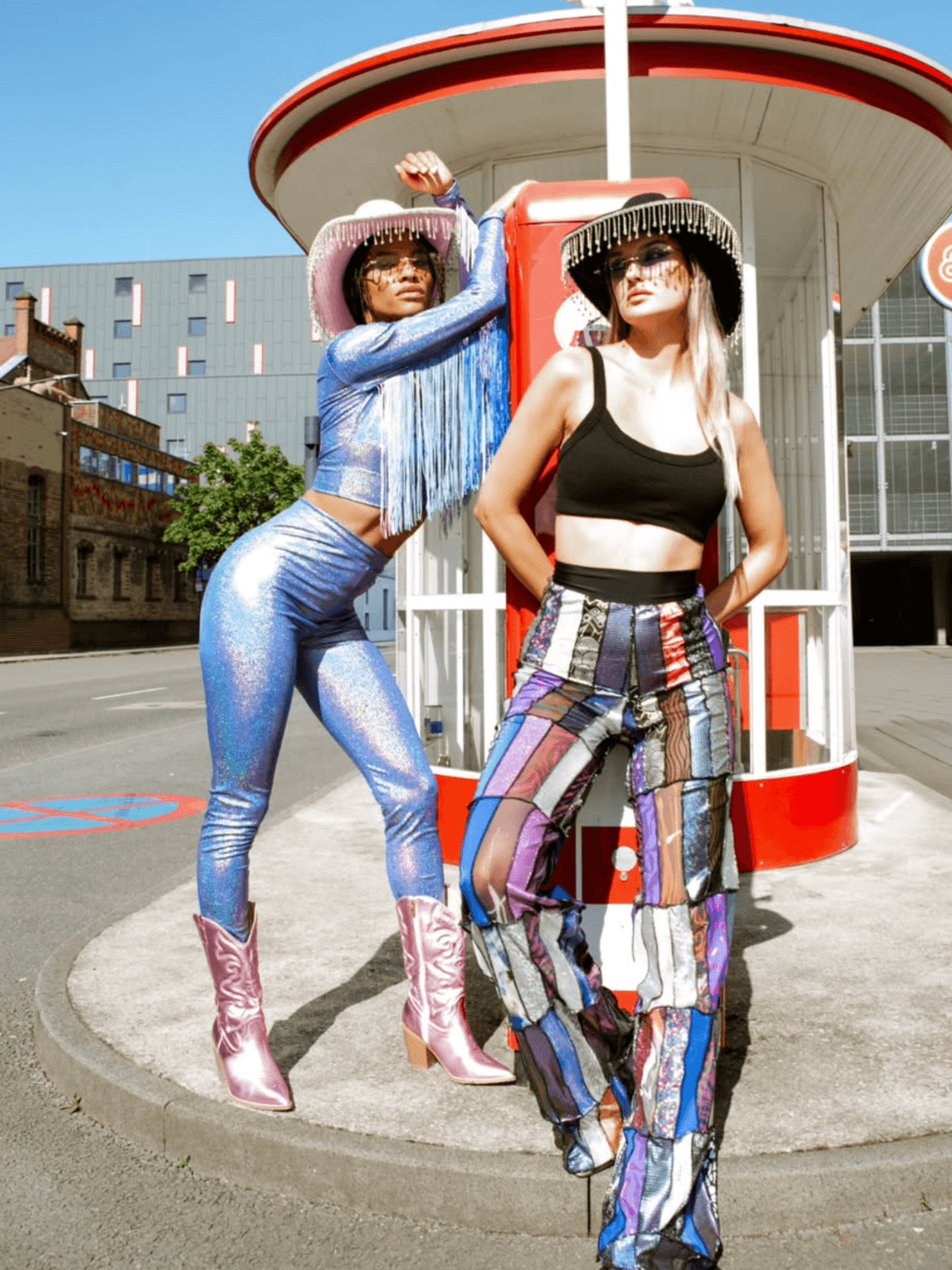
Berlin Clubwear Made for Climbing Trees
Liesa Maria Lettau calls herself three things at once. Designer and artist. Craftswoman and tailor. Businesswoman. She trained as a bespoke tailor and knew early that she wanted something else. “I always used to say you need clothes you can climb trees in.”
What she wanted was festival fashion, clubwear, ravewear. Stretchy fabrics, close to the body. “Those are the best fabrics to stuff into your festival backpack. You put them on, you look good, and you can move.” She didn’t choose the scene as a market. “I made it because that was my life. It still is.”
Her label, Lettau Art Fashion, is slow fashion, handmade in Berlin. Limited collections, made-to-measure pieces, and a zero-waste line of one-offs sewn from leftover fabric. Her designs now dance at festivals around the world. Liesa herself is a Berliner. Her first festival was Sonne Mond Sterne. Two DJs sat in her final-year class at school.
I asked her how she would describe her fashion to a stranger.
“Body conscious. Focused on the body. For everyone who wants to express themselves physically.”
“So you need a perfect body to wear it?”
“No, you don’t. But you need confidence.”

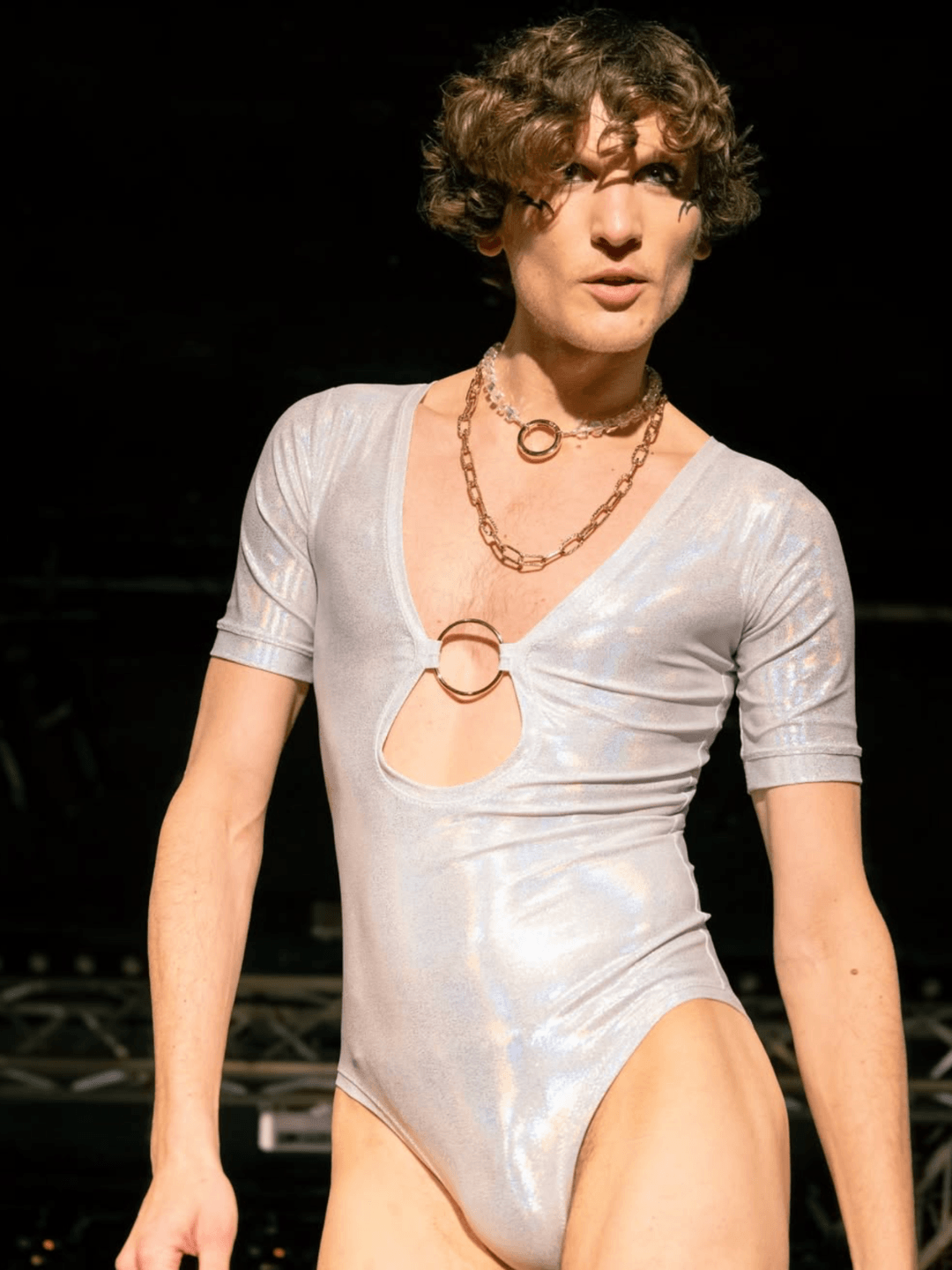
What to Wear to a Club in Berlin Is the Wrong Question
This is where our conversation got interesting. I wanted practical advice for newcomers. Liesa didn’t want to give a dress code.
Her first instinct was blunt. If you’ve never been to a rave and have no connection to techno, she doesn’t quite see why you would start in the longest queue in Berlin. Go somewhere smaller first. See if the music moves you at all.
I pushed back. “Every club in Berlin has a door. Every door can turn you away. There’s so much you can get wrong.”
“But it’s not about the outfit,” she said. “I always find it a bit stupid to say it is. It’s about attitude.”
“I know. But we’re writing an article. That’s what I need to hear from you.”
“Okay. The outfit matters too. But it’s not the most important thing. The most important thing is attitude.”
Attitude doesn’t mean cool. It means appetite. “Are you up for it? For the party? For people? For dancing? If you only want to pose, you don’t need to go to the club anyway.”
“Not in Berlin?”
“No. Not in Berlin.”
That’s the headline, I told her.
The doors notice the difference, she says. “The bouncers can smell it if you just went shopping, dropped 300 euros, and then stand there with nothing behind it.”
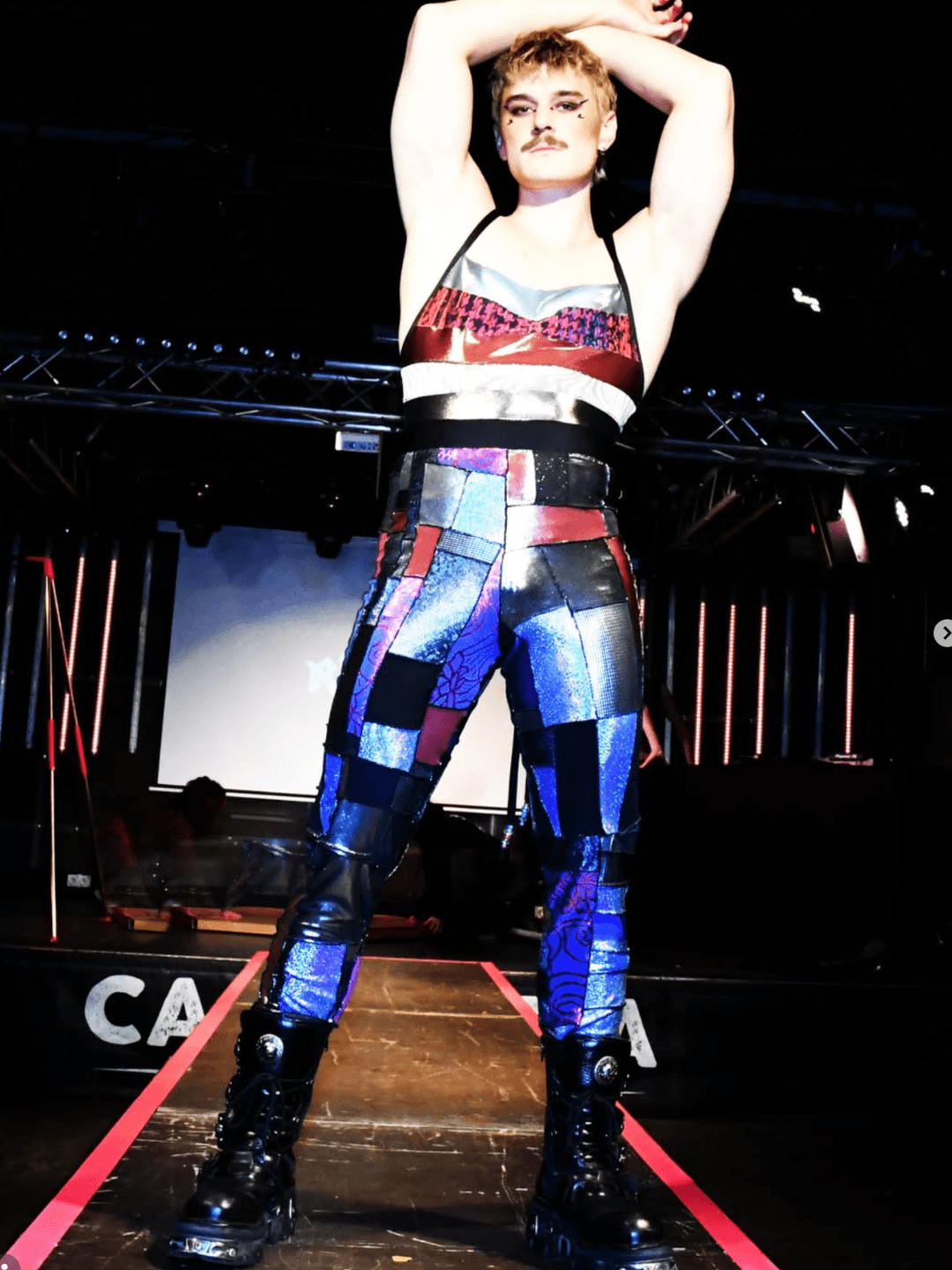
A Berlin Club Outfit Needs Imagination, Not Money
Liesa has partied in Costa Rica, Brazil, Morocco, and through a summer on Ibiza. Elsewhere, she says, nightlife quickly turns into a status check. What are you wearing? Which drinks can you afford? Which VIP area are you in? At festivals: which package, which glamping tent?
Berlin has become more expensive. Some people here spend serious money on their outfits too. And every party has its own style, which is why it pays to look at what a specific night asks for. But Liesa still believes you can arrive at a Berlin club with very little. “It’s more about the creativity you bring than what you paid for your outfit.” A colourful look pieced together from a secondhand shop. A headpiece you made yourself. Done.
What Berlin gives back is a mix you rarely find elsewhere. People in their twenties dance next to people in their sixties, many with unusual careers and creative jobs. Liesa grew up with that and took it for granted. Only when friends from small towns joined her circle did she realise how rare it is.
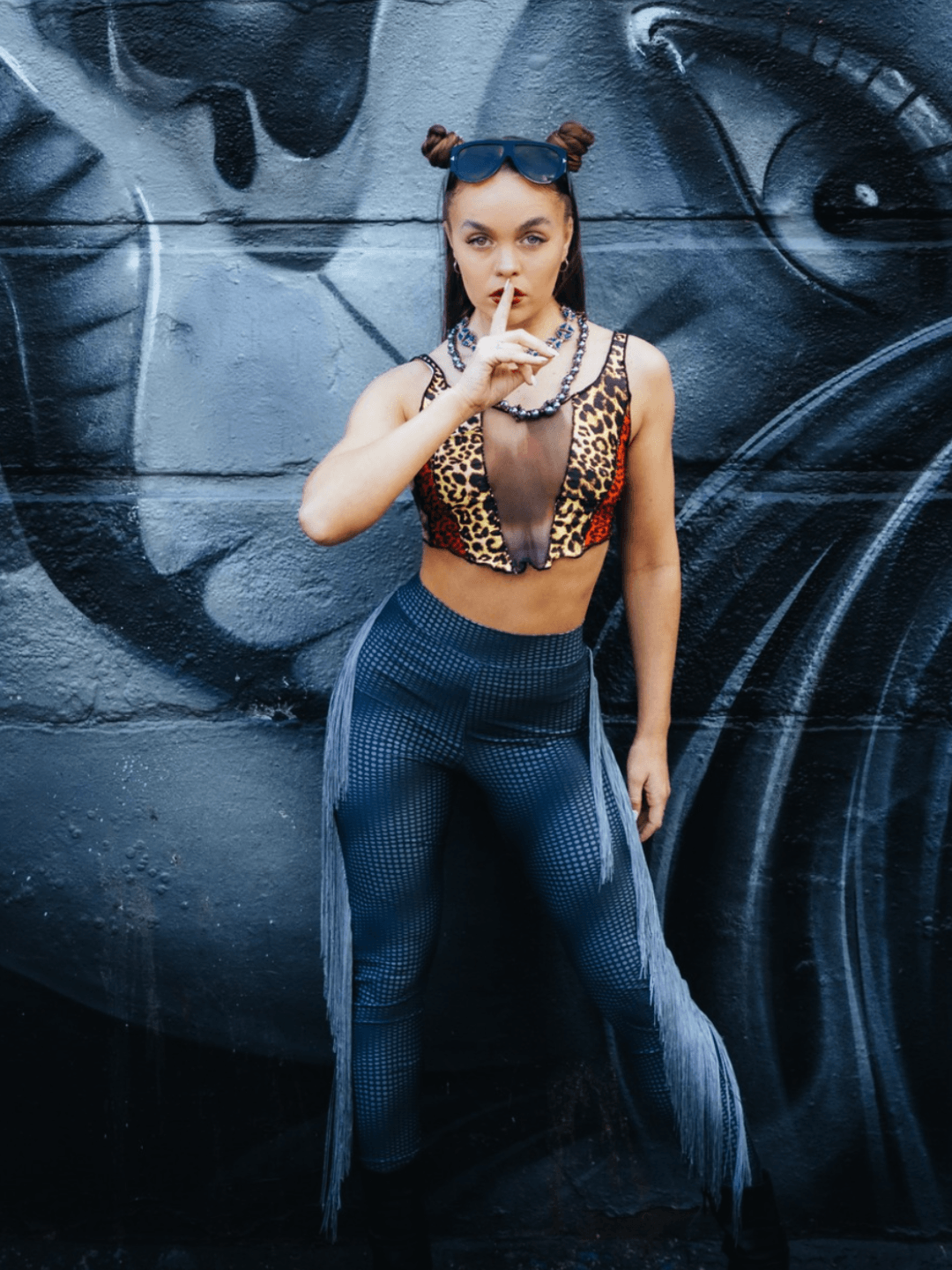
Berlin Club Culture Without Forced Coolness
I told her what her clothes feel like to me. They aren’t just an outfit. They’re a mood, a decision about how I want to feel and where I’m going. Fringes, tight cuts, glitter. A statement.
“Yes,” she said. “It’s a bit like: look at me, talk to me.”
Her clothes are loud, but wearing them in daily life rarely causes trouble, she says, because she smiles so much. “I’m the friendliest person in public.” Then, flatly: “I hate forced coolness. I find it pointless.”
The person she hopes to see in her designs knows the unwritten rules of Berlin’s club culture. You look after each other. You check on the people around you. You don’t push. In a packed room, you let people pass, then keep dancing. “Friendly, respectful, and curious.”
This summer at the Garbicz Festival, she stood on a dancefloor where three people in her outfits were dancing right in front of her. She didn’t tell them she was the designer. She even asked her friends not to point her out. On the dancefloor, she wants to be one body among many, not the name on the label.
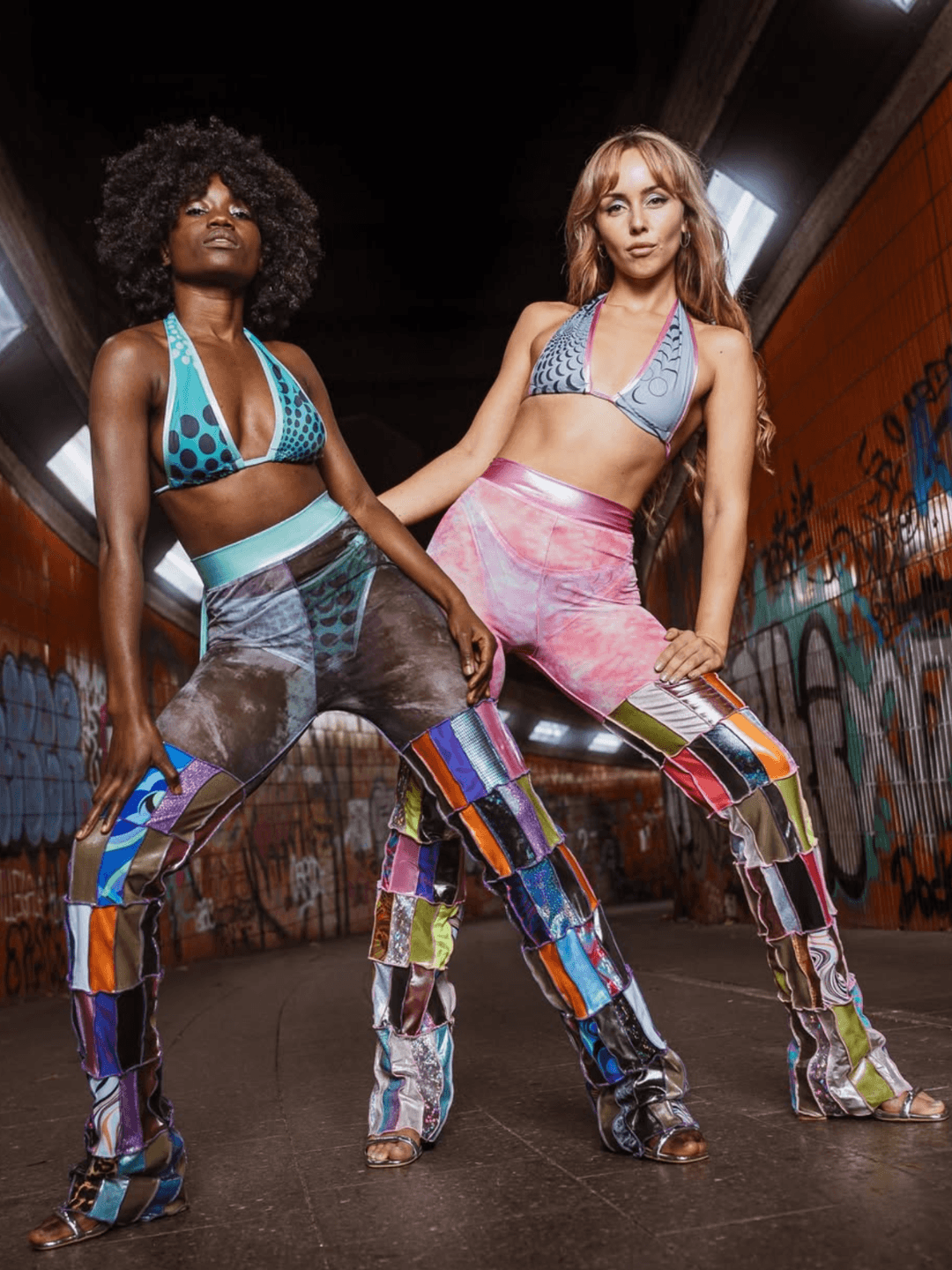
Berlin Rave Outfits Drawn on the Dancefloor
Her ideas come in motion. “Some people have their best ideas while jogging. Dancing is movement too. My head clears.” Somewhere between the kick drum and the crowd, she builds whole patterns in her head. And then there’s the other place inspiration strikes: “Honestly, I often have my best ideas after sex.”
Right now she sees fashion shifting again. Gen Z loves Y2K silhouettes. Everyone wants to wear less and do it creatively. After a few years of shaping and flattering, cutouts are back. Her question at the cutting table: where can I take away more fabric and still make it interesting? Glitter is slowly fading. Shiny surfaces stay. Sheer, mesh, and transparent pieces everywhere. Silver gives way to gold, and earth tones meet neon.
The scene’s colours have changed with it. Fifteen years ago, people wore secondhand and sneakers. Liesa’s first night at Berghain: a denim mini and a white T-shirt. “Unthinkable today.” Then came the long era of black, black, black. Now Berlin’s dancefloors are turning colourful again.
She designs mainly for women, because it inspires her more and more is possible. Queer people wear her pieces too, and the trousers I wear are unisex. Her take on menswear is short: “There are no men’s clothes. There are only unisex clothes, because women can wear all of them.”
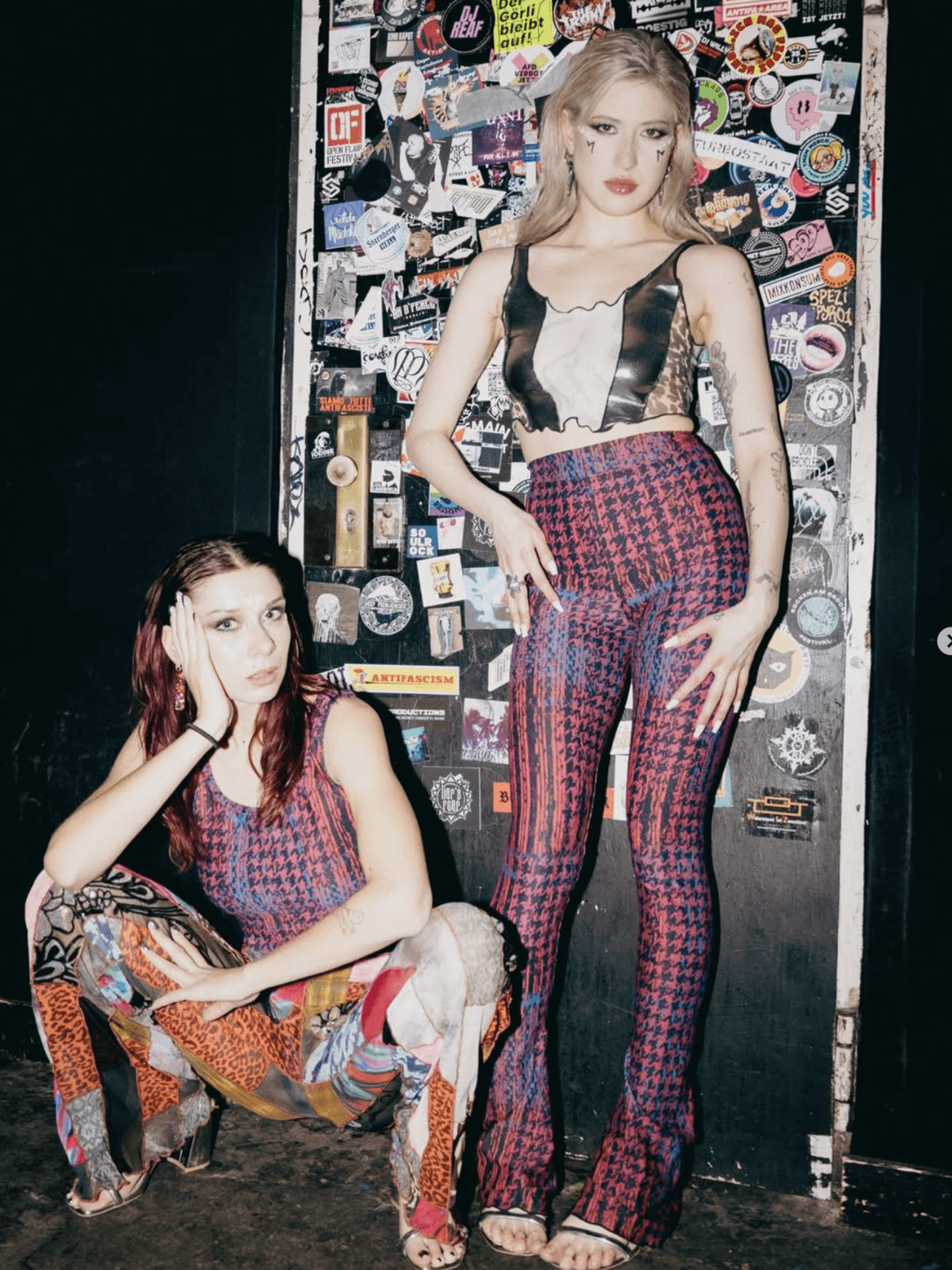
The Great Equalizer
What does she wish for the people who wear her designs? Not more sales. More nights out. With everything happening in the world, she sees people retreating to the couch. She wants them to keep going out, and to be able to afford it, mentally and financially. “Being able to dance is so important. Being able to connect with people.”
I asked whether people who dance together could make the world a little more peaceful.
“Yes, I believe that. It makes you more open. It breaks down prejudice and frustration. A lot of people are mean simply because they’re frustrated. Or envious, always looking at what others have.” The dancefloor works against that. “It’s an equalizer. If you experience that regularly, you become much more relaxed.”
Then she qualified it, the way a Berliner would: “At least in Berlin.”
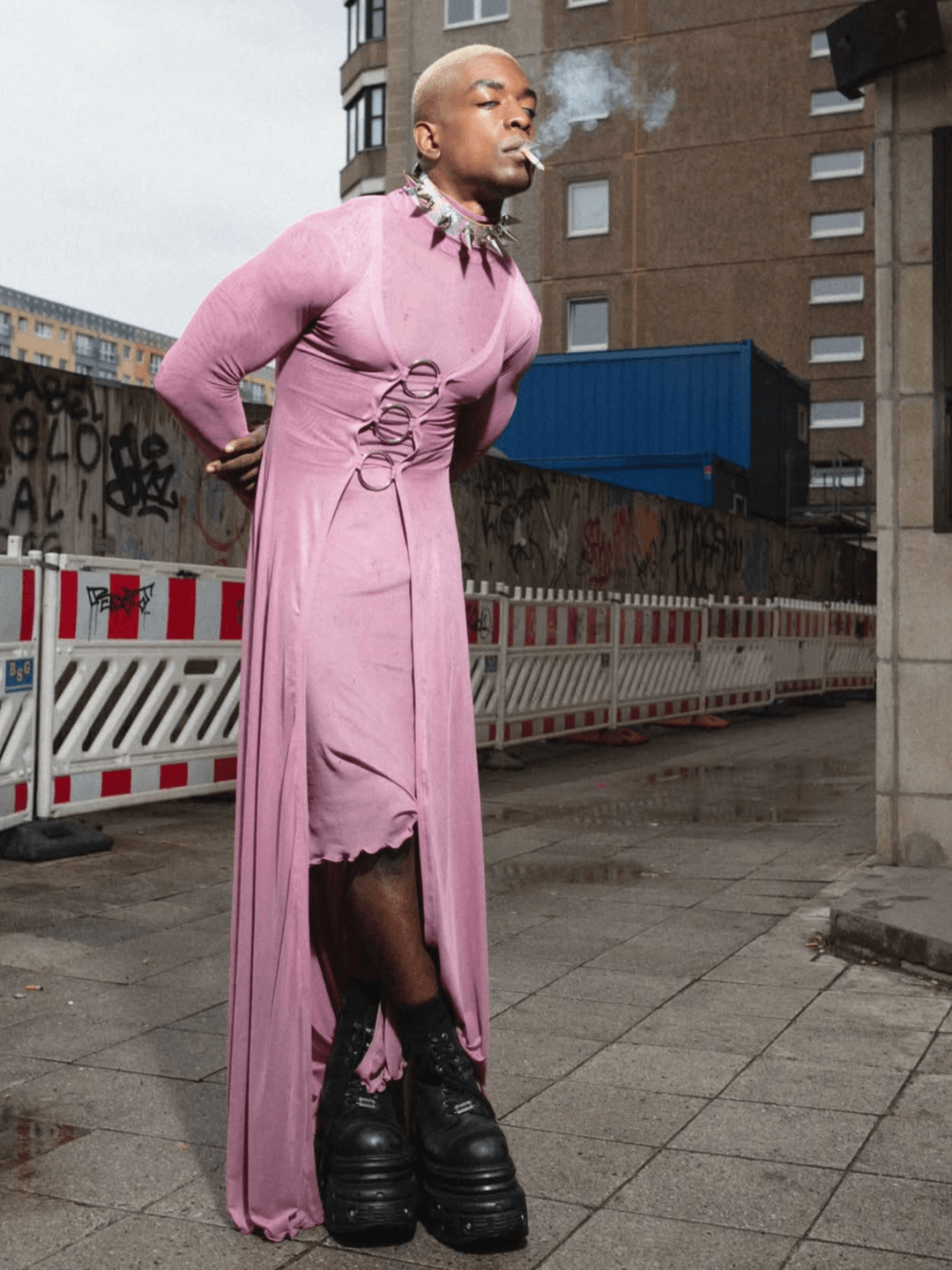
What to Wear Clubbing in Berlin: Before You Go
So, what do you wear to a club in Berlin? Here is what Liesa would tell you.
Bring appetite, not just an outfit. Come for the music, the people, and the dancing. Posing alone won’t get you far.
Creativity beats a price tag. Secondhand finds and something you made yourself say more than a fresh shopping bag.
Dress to move. Choose something you can dance in for hours, and something you can still stuff into a backpack.
Look after the people around you. Don’t push, let others pass, keep an eye on each other. Friendly, respectful, curious.
Lettau Art Fashion: slow fashion, handmade in Berlin. Collections, zero-waste pieces and made-to-measure designs at lettauartfashion.com
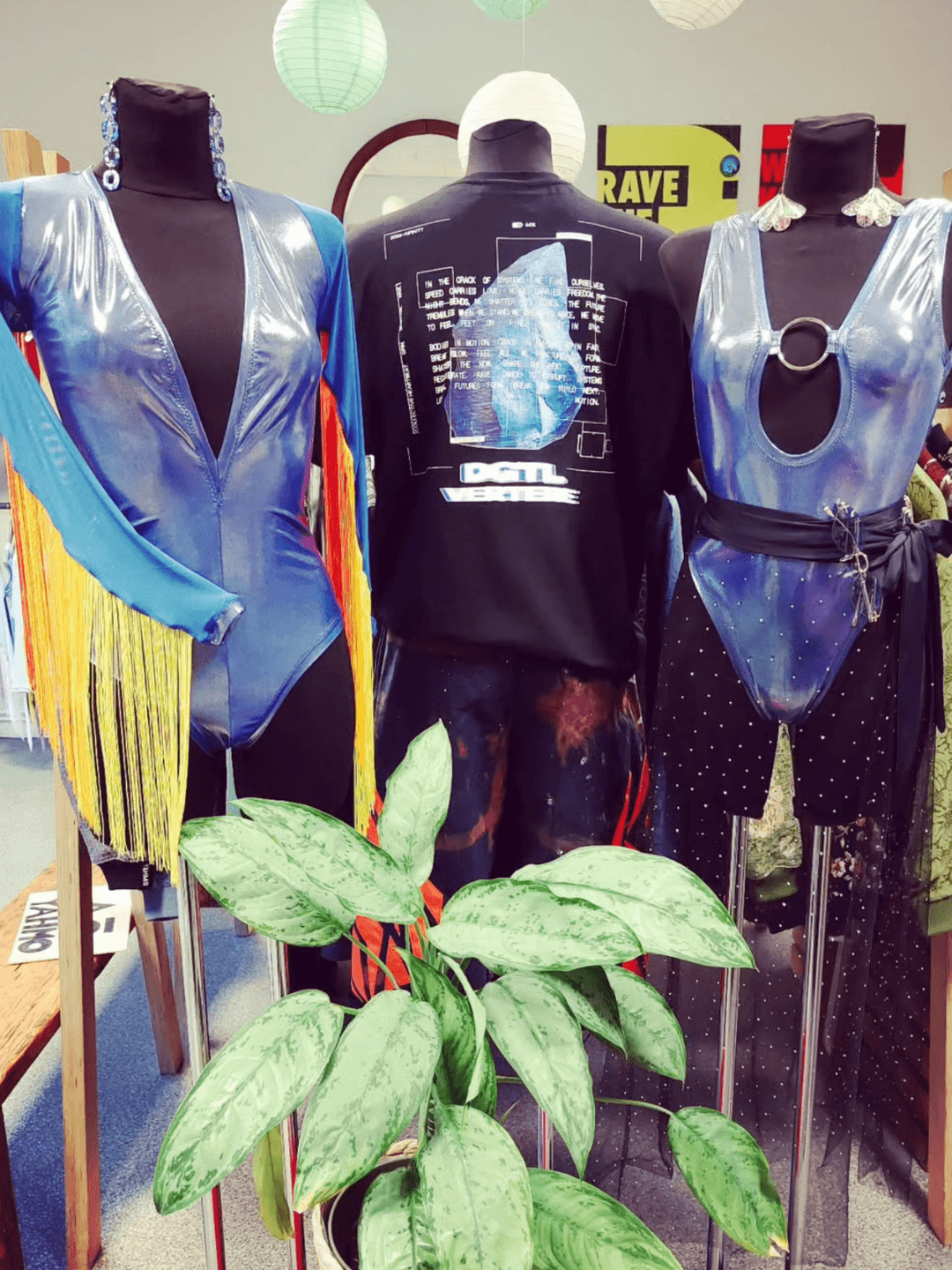
Here you'll find all the stores in Berlin where you can buy Lettau Fashion
Sources for facts in this article:
- Interview between Giada Armani and Liesa Maria Lettau, designer and founder of Lettau Art Fashion, for Berlin Kink Calendar.