
From 17 July to 20 July 2026:
In the middle of nowhere, between decommissioned excavators and a lake in Saxony-Anhalt, something keeps happening that most cities only promise.
There is a place in Germany called Ferropolis — the city of iron. A peninsula of industrial excavators that were simply left where they stopped working, standing in a lake like monuments to a century of extraction and collapse. They were never meant to be beautiful. And yet, once a year, something turns them into something else entirely.
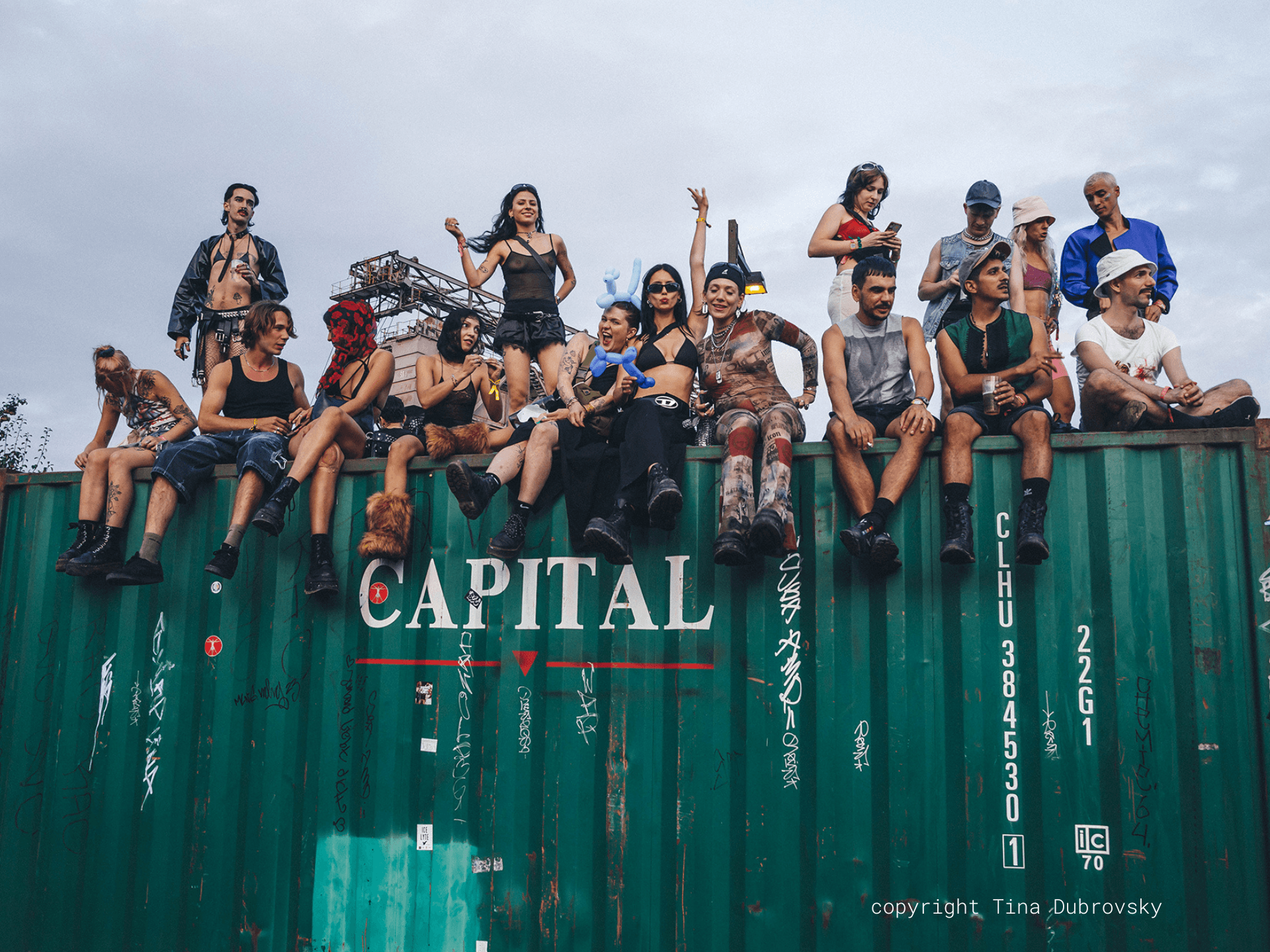
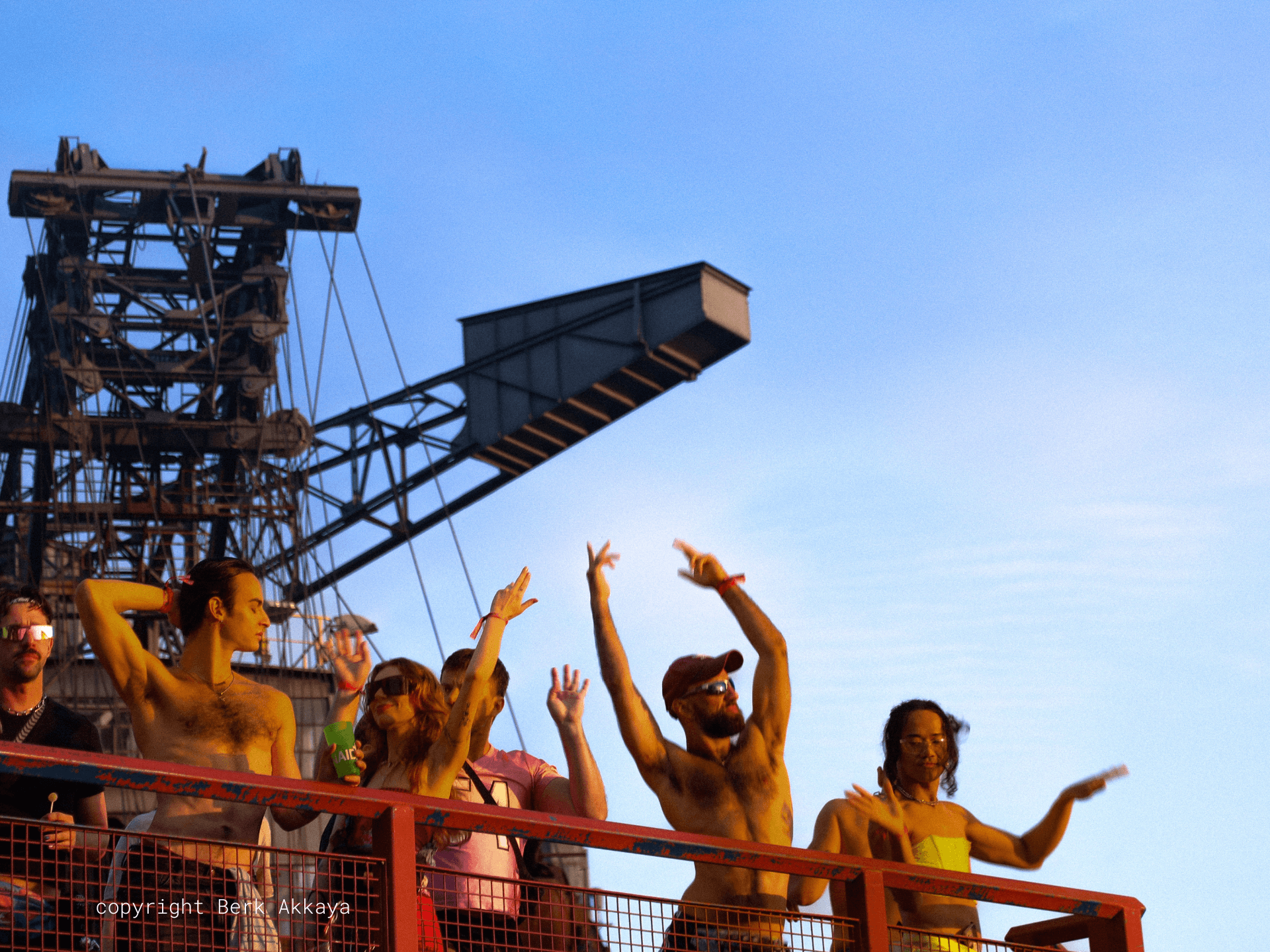
WHOLE Festival arrives at Ferropolis and does not try to erase the industrial past. The machines stay. The cranes rise above the stages. The iron is the backdrop, and the bodies — dancing, resting, touching, being — are the foreground. It is a genuinely strange combination. And it works in a way that few purpose-built festival sites ever do.
Now in its eighth edition, WHOLE has long stopped being a secret. More than 30 queer collectives — Pornceptual, Herrensauna, Gegen, and many others — make the journey from across the globe to spend three days and three nights here. The music is techno and house. The people are genuinely international. And the question the festival keeps asking, quietly but insistently, is: what does it actually feel like to be in a space that was built with you in mind?
Pleasure as Infrastructure
WHOLE is not a festival that treats play spaces as an afterthought. The pansexual areas and FLINTA*-only zones are expanded this year, and they are understood as part of the festival’s architecture — not a side room, not an add-on, but a structural commitment to the idea that bodies have needs beyond the dancefloor. This matters more than it might sound.
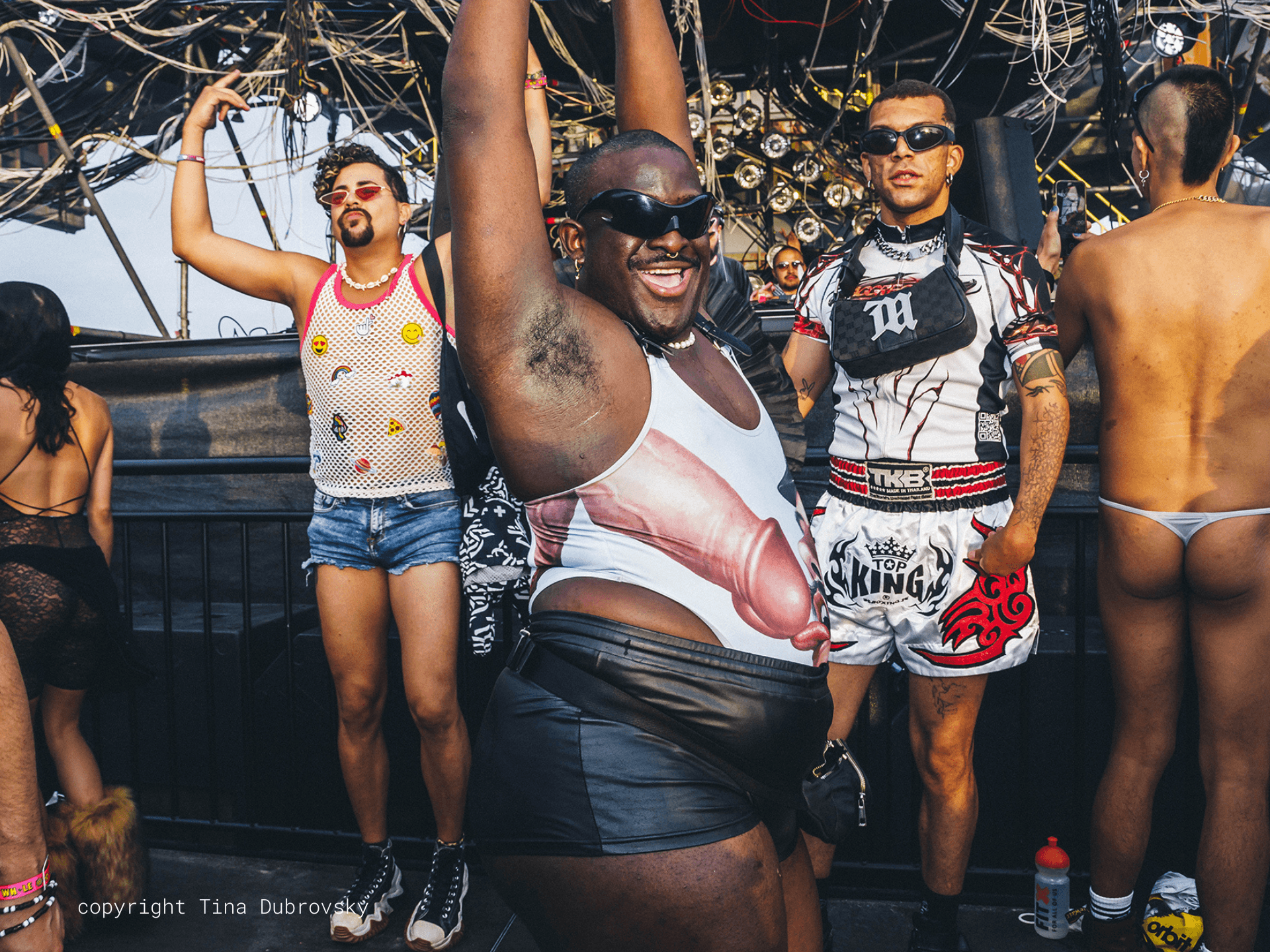
Most public spaces — and most festivals — are built around an implicit body. A body that is assumed, that does not need to negotiate its presence, that moves through the world without friction. WHOLE is not built around that body. It is built around everyone else. The workshops and talks that run alongside the music — on care, on embodiment, on queer organising — are not added for optics. They are the substance. The dancefloor and the workshop are the same project, approached from different angles.
The Solidarity Programme Is the Point
WHOLE’s Solidarity Programme prioritises refugees, QTIBPOC, trans and disabled attendees with free access, transport, food, drink and camping gear. It is easy to read this as a gesture — a warm-hearted footnote to an otherwise expensive festival. It is not. It is a structural argument about who gets to rest, who gets to dance, who gets to take up space without justifying the cost.
WHOLE runs a tiered pricing model so that the cost of entry does not become its own filter. €279 is the standard rate. That is real money. The fact that WHOLE builds a mechanism to make the festival accessible to people for whom that price is a barrier is not a marketing decision; it is a political one. It acknowledges that 'inclusive' cannot just mean 'you are welcome here if you can afford to come.' Inclusion without redistribution is decoration.
Queer Collectives and the Geography of Safety
What draws 30-something collectives from across the globe to a field in Saxony-Anhalt? Partly the music, certainly. But mostly, the answer has to do with something harder to name: the experience of being in a space where the usual negotiations — the ambient threat assessment, the reading of the room, the decision about how visible to be — are temporarily suspended.
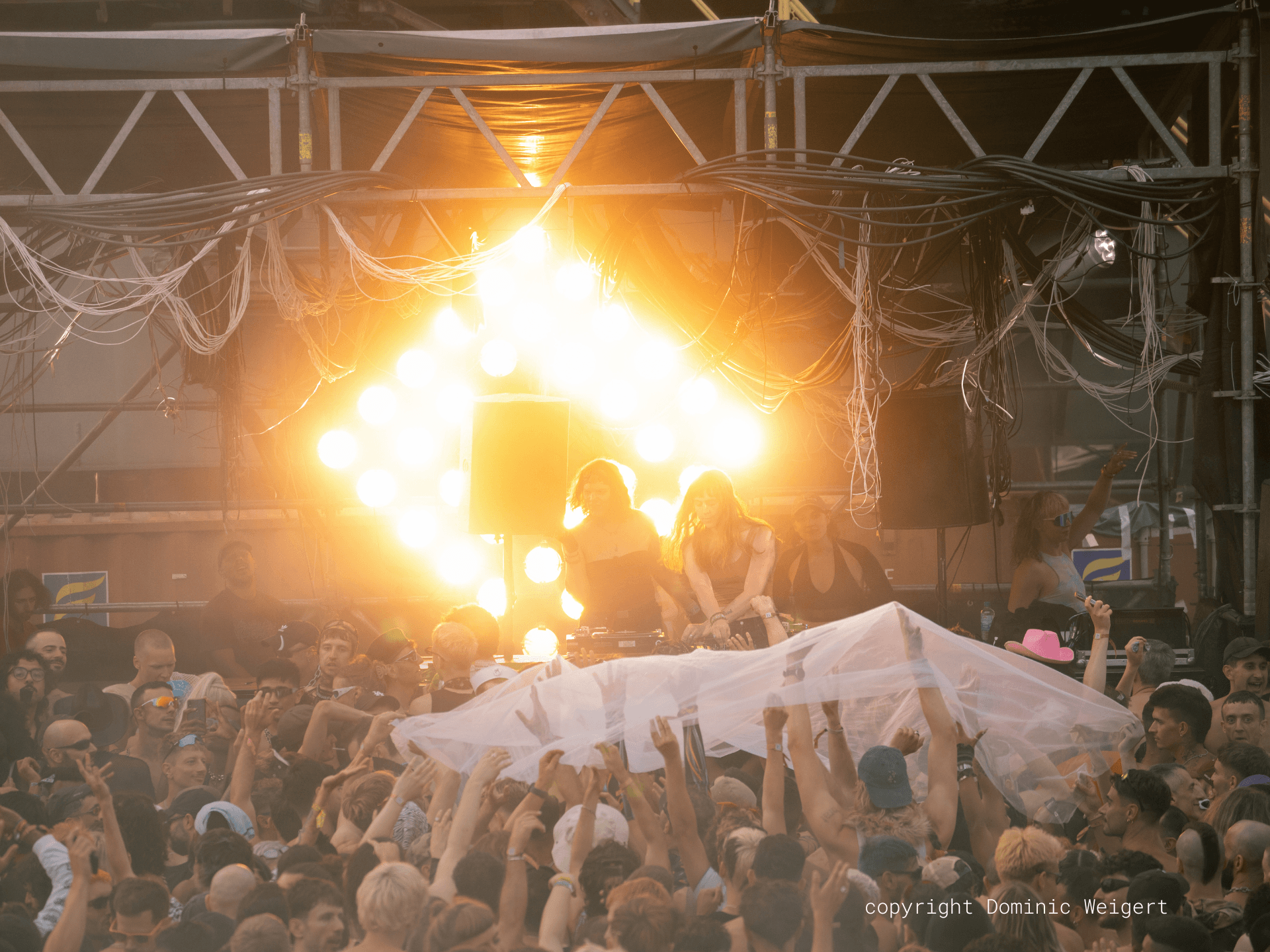
For many of the people who come to WHOLE, that is not an ordinary experience. The collectives that form the backbone of the festival — Pornceptual with its unapologetic eroticism, Herrensauna with its reclaimed masculinity, Gegen with its political edge — each represent communities that have built their own infrastructure of safety elsewhere, often in environments that offered them nothing. Coming together at Ferropolis is less a convergence than a recognition: we are doing the same thing, from different cities, in different languages, with different histories.
The consent framework — only yes means yes, an awareness team on site — is part of the same logic. It does not police the space. It makes the space possible. There is a difference, and WHOLE understands it.
Why This Landscape
It would be easy to read the choice of Ferropolis as pure aesthetics — the dramatic silhouettes of the excavators at golden hour, the lake catching the light at dawn, the general surrealism of a techno festival surrounded by industrial ruins. All of that is real. The photographs from WHOLE are genuinely extraordinary.
But there is something else going on. Ferropolis is a post-industrial site — a place where a certain idea of productivity ended, where the machines that extracted value from the land were left standing when the extraction was done. To fill that landscape with queer bodies, with dancing and pleasure and collective care, is not a neutral act. It is a reclamation. Not political in a slogan-bearing sense, but in the older, more fundamental sense: this land was used for one thing, and now we are using it for something else entirely. Something that is not productive in any legible economic way. Something that is simply, stubbornly, joyful.
That is what WHOLE does, edition after edition.
Not despite the iron. Because of it.
Before you mark your calendar: always double-check dates, location, and ticket info directly with the organizers.
Even the best promises come with fine print.